



In Aviation and Aerospace, Cherry Pickers (Boom Lifts) are a common way to work at height - and a common source of falls when they are misused. This guide explains how Aviation and Aerospace teams in Ireland use Cherry Pickers (Boom Lifts) safely, and why a Working at Heights Course ties it all together.
Cherry Pickers (Boom Lifts) in Aviation and Aerospace: where the risk lies
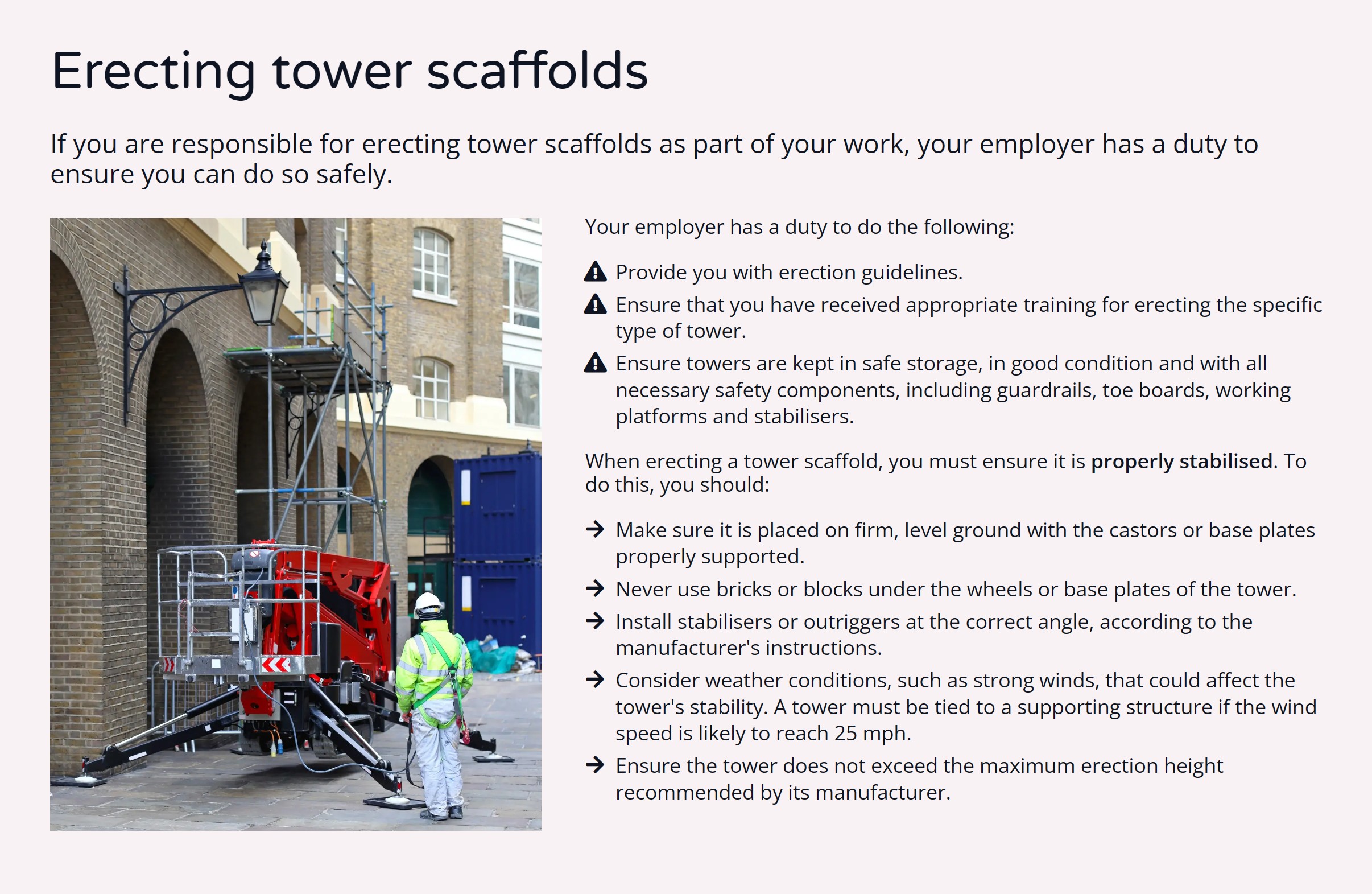
A Shannon or Limerick MRO crew accessing a tail surface from a maintenance dock, where falls and aircraft damage are both in scope. Cherry Pickers (Boom Lifts) are suited to reaching over obstacles and to height where an articulating or telescopic boom is needed, but in a Aviation and Aerospace setting the margin for error is small.
Pre-use checks for Cherry Pickers (Boom Lifts)
Before any Aviation and Aerospace worker uses Cherry Pickers (Boom Lifts), confirm that:
- Overhead and electrical clearances confirmed
- Function and emergency-lowering checks before use
- Harness and short restraint lanyard clipped to the anchor
- Ground assessment for stability and voids
The relevant standard here is EN 280, operated by IPAF 3b card holders with a worn, in-date harness and restraint lanyard.
Common Cherry Pickers (Boom Lifts) faults to never ignore
- Catapult risk when the basket snags and frees
- Untrained operators
- No harness or wrong lanyard length
- No rescue plan
Aviation height work is tightly procedure-driven, combining safety rules with aircraft protection.
The Working at Heights Course makes compliance simple
The practical fix is straightforward. Our Working at Heights Course is delivered fully online, takes about 45 minutes, and issues a downloadable certificate the same day. It is CPD certified, RoSPA approved and QQI aligned, and it is written specifically for Aviation and Aerospace teams using Cherry Pickers (Boom Lifts).
The Working at Heights Training covers the avoid-prevent-minimise hierarchy, ladder and stepladder safety, MEWPs and scaffolds, harnesses and anchor points, and how to carry out a proper risk assessment. Every learner finishes with a recognised Working at Heights Certificate that stands up to HSA inspection and supports your insurance position.
Training that goes beyond the tick-box
Insurers now ask directly whether your team holds current Working at Heights certification before they price a policy or settle a claim involving Cherry Pickers (Boom Lifts) in Aviation and Aerospace. A worker hurt at height with no Working at Heights Certificate turns a defensible incident into an indefensible one, and that follows your premium for years.
Supervision is the quiet control that holds everything together. Even a perfectly trained worker drifts under time pressure, so someone on site needs the knowledge and the authority to stop unsafe work involving Cherry Pickers (Boom Lifts) in Aviation and Aerospace before it becomes an incident. That only happens when supervisors are trained too.
Frequently asked questions
Do Aviation and Aerospace workers need training to use Cherry Pickers (Boom Lifts)?
Yes. Safe use of Cherry Pickers (Boom Lifts) is part of working at height. A Working at Heights Course covers selection, inspection and safe use for Aviation and Aerospace tasks.
How often should Cherry Pickers (Boom Lifts) be inspected?
Before every use by the operator, plus formal recorded inspections to the relevant standard. Keep the logs for HSA inspection.
Is online training enough for Aviation and Aerospace height work?
Our online Working at Heights Training covers the legal and safe-system knowledge; equipment-specific practical tickets (such as IPAF or PASMA) are added where the task requires them.
Get certified today
Do not wait for an HSA inspection or a near miss to act. Aviation and Aerospace teams can complete the Working at Heights Course online in 45 minutes and download a certificate the same day. For 10 or more learners, see our team training rates, or contact our team for a tailored quote.
Start the online Working at Heights Training now and put a recognised certificate in every worker's file before the next job at height begins.