




In Telecommunications, Safety Nets and Soft-Landing Systems are a common way to work at height - and a common source of falls when they are misused. This guide explains how Telecommunications teams in Ireland use Safety Nets and Soft-Landing Systems safely, and why a Working at Heights Course ties it all together.
Safety Nets and Soft-Landing Systems in Telecommunications: where the risk lies
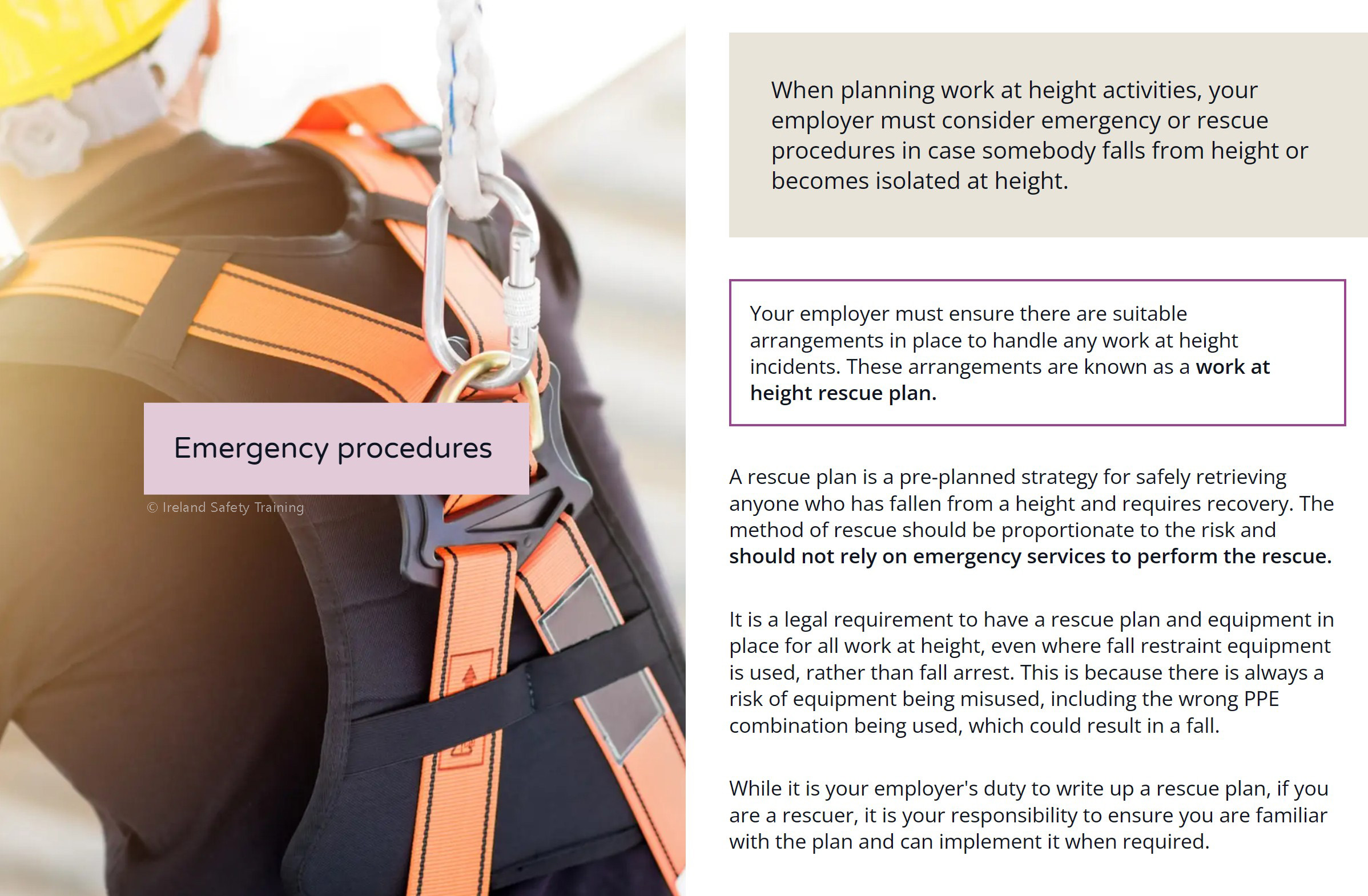
An engineer climbing an exposed rural mast to install 5G antennas, dependent on a faultless harness and a workable rescue plan. Safety Nets and Soft-Landing Systems are suited to collective fall mitigation during roof and steel work where a fall cannot be fully prevented, but in a Telecommunications setting the margin for error is small.
Pre-use checks for Safety Nets and Soft-Landing Systems
Before any Telecommunications worker uses Safety Nets and Soft-Landing Systems, confirm that:
- Nets are rigged by competent riggers
- Anchorage is sound
- The area beneath is clear
- Fall height into the net is minimised
The relevant standard here is EN 1263, rigged by trained net riggers as close beneath the work as practicable.
Common Safety Nets and Soft-Landing Systems faults to never ignore
- Excessive fall height
- Poor anchorage
- Damaged or out-of-date nets
- Untrained rigging
Mast and pole work is specialist height work requiring advanced training, rescue capability and strict lone-working controls.
The Working at Heights Course makes compliance simple
You do not need a classroom or a lost work day to fix this. Our Working at Heights Course is delivered fully online, takes about 45 minutes, and issues a downloadable certificate the same day. It is CPD certified, RoSPA approved and QQI aligned, and it is written specifically for Telecommunications teams using Safety Nets and Soft-Landing Systems.
The Working at Heights Training covers the avoid-prevent-minimise hierarchy, ladder and stepladder safety, MEWPs and scaffolds, harnesses and anchor points, and how to carry out a proper risk assessment. Every learner finishes with a recognised Working at Heights Certificate that stands up to HSA inspection and supports your insurance position.
Training that goes beyond the tick-box
Falls from height remain one of the leading causes of serious and fatal workplace injury in Ireland, year after year. The pattern is depressingly consistent for Safety Nets and Soft-Landing Systems in Telecommunications: a short task, a familiar setting, a ladder or platform that seemed fine, and a single moment of overreach. Proper training breaks that pattern by making the safe choice the automatic one.
The rescue plan is the part most teams forget. If a worker doing Safety Nets and Soft-Landing Systems in Telecommunications falls and is left hanging in a harness, suspension trauma can become life-threatening within minutes. Calling the emergency services is not a rescue plan; having the equipment, the trained people and the method to recover them quickly is. Our Working at Heights Training makes that planning routine.
Frequently asked questions
Do Telecommunications workers need training to use Safety Nets and Soft-Landing Systems?
Yes. Safe use of Safety Nets and Soft-Landing Systems is part of working at height. A Working at Heights Course covers selection, inspection and safe use for Telecommunications tasks.
How often should Safety Nets and Soft-Landing Systems be inspected?
Before every use by the operator, plus formal recorded inspections to the relevant standard. Keep the logs for HSA inspection.
Is online training enough for Telecommunications height work?
Our online Working at Heights Training covers the legal and safe-system knowledge; equipment-specific practical tickets (such as IPAF or PASMA) are added where the task requires them.
Get certified today
Do not wait for an HSA inspection or a near miss to act. Telecommunications teams can complete the Working at Heights Course online in 45 minutes and download a certificate the same day. For 10 or more learners, see our team training rates, or contact our team for a tailored quote.
Start the online Working at Heights Training now and put a recognised certificate in every worker's file before the next job at height begins.