




If you are one of the Safety Officers in Marine and Ports, working at height is part of the job - and so is the legal duty that comes with it. Here is what Safety Officers in Irish Marine and Ports need to know, and how a Working at Heights Course keeps you covered.
The responsibilities of Safety Officers
You own the system. Strong documentation and a trained workforce make HSA inspections routine rather than stressful. In day-to-day Marine and Ports work that means you should:
- Investigate near misses and incidents
- Audit equipment inspection and training records
- Advise management on compliance
- Keep policies aligned to HSA guidance
The Marine and Ports hazards Safety Officers must control
In Marine and Ports, the falls that Safety Officers most often have to prevent involve falls into water as well as to deck, access to cranes and gantries and exposed, weather-driven conditions. Port height work adds drowning risk to fall risk, so rescue planning must cover both.
The Working at Heights Course makes compliance simple
You do not need a classroom or a lost work day to fix this. Our Working at Heights Course is delivered fully online, takes about 45 minutes, and issues a downloadable certificate the same day. It is CPD certified, RoSPA approved and QQI aligned, and it is written specifically for Safety Officers in Marine and Ports.
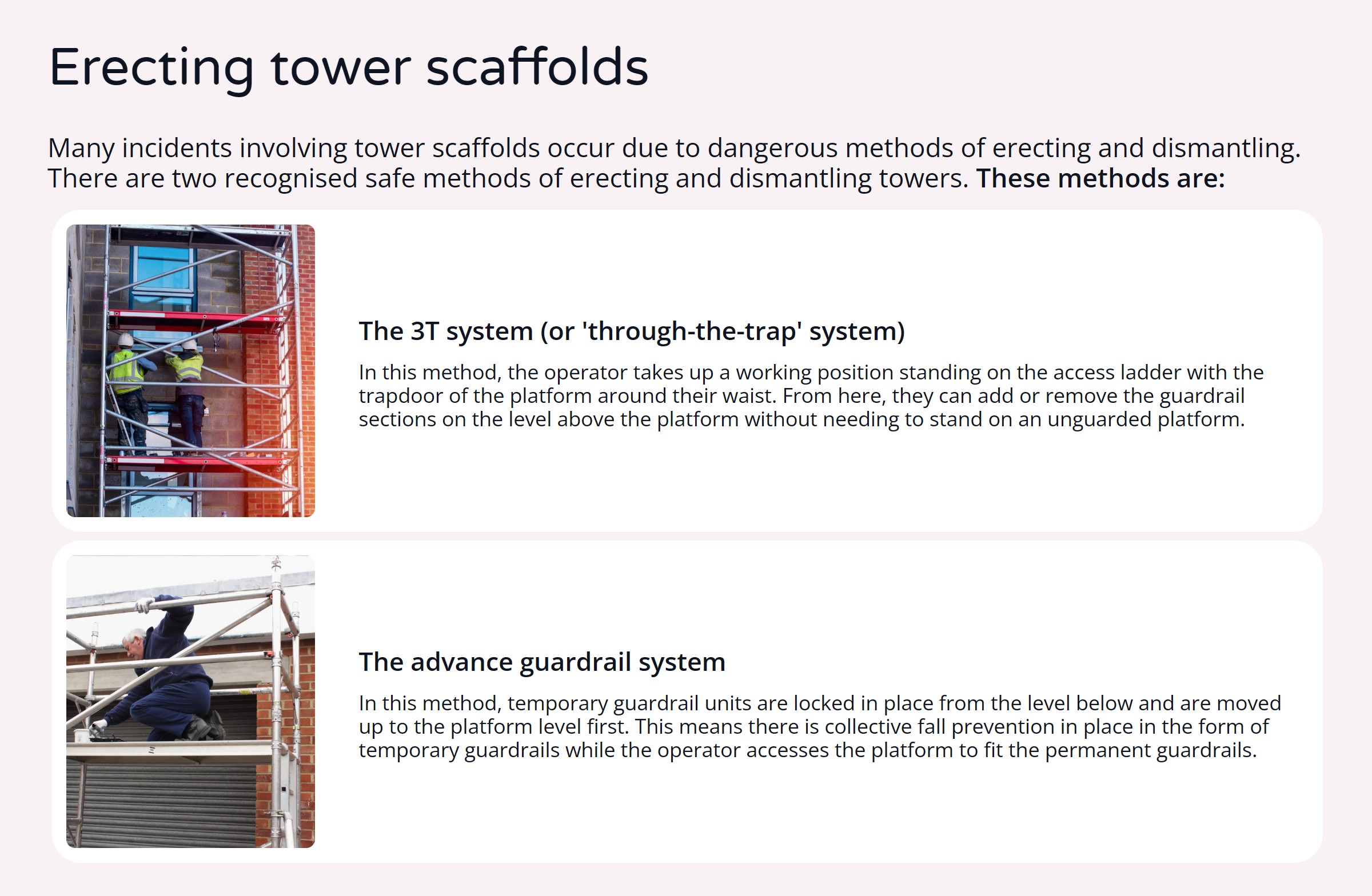
The Working at Heights Training covers the avoid-prevent-minimise hierarchy, ladder and stepladder safety, MEWPs and scaffolds, harnesses and anchor points, and how to carry out a proper risk assessment. Every learner finishes with a recognised Working at Heights Certificate that stands up to HSA inspection and supports your insurance position.
Training that goes beyond the tick-box
Documentation is what turns good practice into proven compliance for Safety Officers in Marine and Ports. Keep your risk assessment, your method statement, your equipment inspection logs and your training records together, and an HSA visit becomes a short, calm conversation rather than a drawn-out investigation.
Weather turns a routine job into a dangerous one faster than anything else in Ireland. Wind, rain, frost and poor light all raise the risk of Safety Officers in Marine and Ports, and the right call is often to stop and reassess rather than push on. Knowing where that line sits is part of being properly trained.
Frequently asked questions
Do Safety Officers in Marine and Ports need their own height training?
Yes. Whatever your role, if you plan, supervise or carry out work at height you need a Working at Heights Certificate.
What course suits Safety Officers best?
The Working at Heights Course covers the duties of Safety Officers and all other roles in one accredited, online programme.
How long does it take?
About 45 minutes online, with a same-day certificate, so Safety Officers in Marine and Ports stay compliant without losing a work day.
More on staying safe at height
Falls from height remain one of the leading causes of serious and fatal workplace injury in Ireland, year after year. The pattern is depressingly consistent for safety officers in marine and ports: a short task, a familiar setting, a ladder or platform that seemed fine, and a single moment of overreach. Proper training breaks that pattern by making the safe choice the automatic one.
Competence is not the same as experience. A worker who has used ladders for twenty years can still carry twenty years of bad habits. Refresher training matters for safety officers in marine and ports precisely because confidence drifts away from the rules over time, and a quick refresher resets it.
Get certified today
Do not wait for an HSA inspection or a near miss to act. Safety Officers in Marine and Ports can complete the Working at Heights Course online in 45 minutes and download a certificate the same day. For 10 or more learners, see our team training rates, or contact our team for a tailored quote.
Start the online Working at Heights Training now and put a recognised certificate in every worker's file before the next job at height begins.